
After finishing the Lindberg Space Base I decided why not keep the theme going and build the Glencoe Nuclear Powered Space Station (to be referred to as the Glencoe Space Station from here on out). It appeared on the 1955 TV series Man In Space by Walt Disney. It is a variation on the station envisioned by Werner VonBraun. It says the scale is 1/300 on the box but it could be anywhere from 1/288 to 1/300. There are no figures to judge from, only bottle suits that a person can maneuver in. You really don’t know how big a pilot figure would be, so pick your scale.

The kit originally came out in 1958 by Strombecker. At that time it was called Walt Disney’s Space Station. A bit later, I can’t find the exact year it was re-released by Selcol/Strombecker and was called Dr. Wehrner Von Braun’s Space Station. The kit then disappeared and was not re-released.
Glencoe purchased the molds sometime in the early 1990’s. Much to their dismay the molds were not stored very well and were in bad condition. They restored what they could to be able to even run them through the injection machine. Glencoe then released the kit in 1993.
The quality of the parts varies from kit to kit depending on whether your kit was early or late in the run. I have two of them in my stash, bought at different times. One kit has a small amount of flash, but the other one has quite a bit. Here are the parts in the kit. I photoed the worst of the two. I’ll be building the better one, but they would result in the same model with one requiring more clean up.

All the parts were complete. A number of the smaller parts had removed themselves from the runners. many of the larger parts have quite a rough surface because of the poor storage condition of the molds. Lots of sanding and scraping is in my future.
The package of .020 styrene rod will be used for the many, many spokes on the kit. The instructions have you use thread to run the spokes from the ring to the hub. That sounds like a lot of work that would likely lead to sagging spokes after some time. At first I thought I would use some wire wrap wire instead, which would be less likely to sag than thread. But after reviewing some other build reports on the web, I decided that styrene rods would be the best and much more rigid.
Construction starts with the ring and hub. You build them in halves, top and bottom. The parts all look the same. There are no part numbers. Fortunately half the parts are keyed with some having a raised line and some a recessed line. You can tell which ring parts are the top since two of the three ring section have circular raised sections with a hole in the center. This is for some of the antennas. That confirms they are the top parts. The fit is not horrible. Even so, there will be a bit of filler work. The main thing you need to do is make sure all the little notches in the ring and hub are open so you can add the spokes later.
Here is a closer look at one of the ring sections and the base so you can see how rough the surface is in places. This photo shows a sample of the surface roughness.

The is the base part.
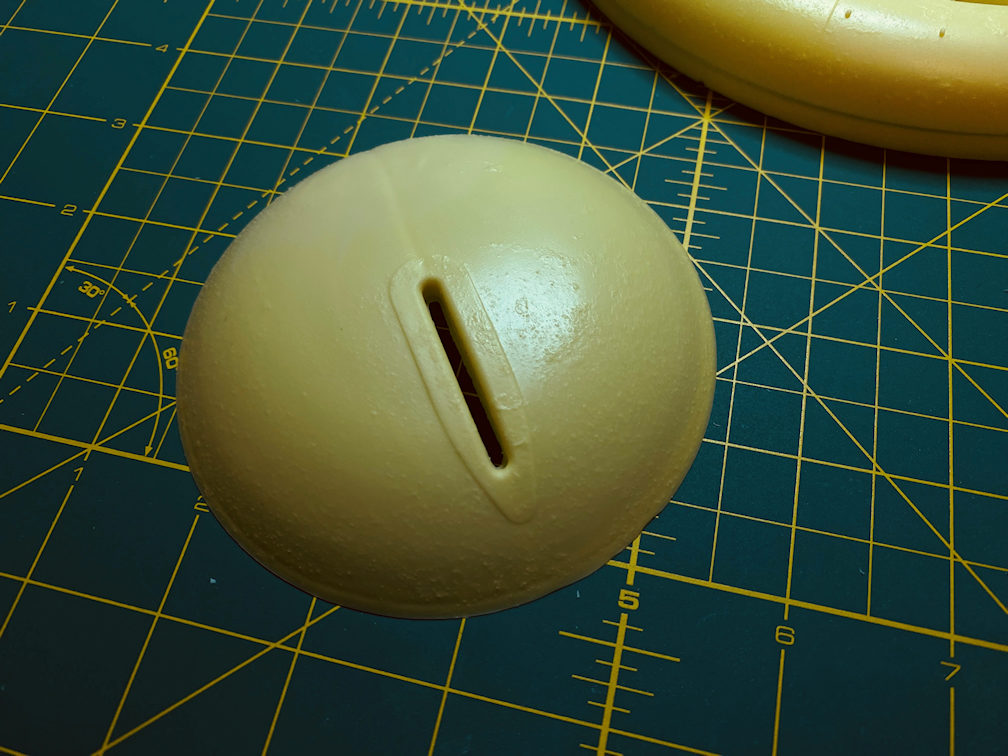
The first thing I did was sand and scrape off as much of the surface roughness as I could. Here is a closer look at one of the ring sections after cleaning it up. Cleaning up just the parts for the upper ring half took about two hours. I’m sure the bottom half will need about the same level of correction.

I then glued the three ring sections together.
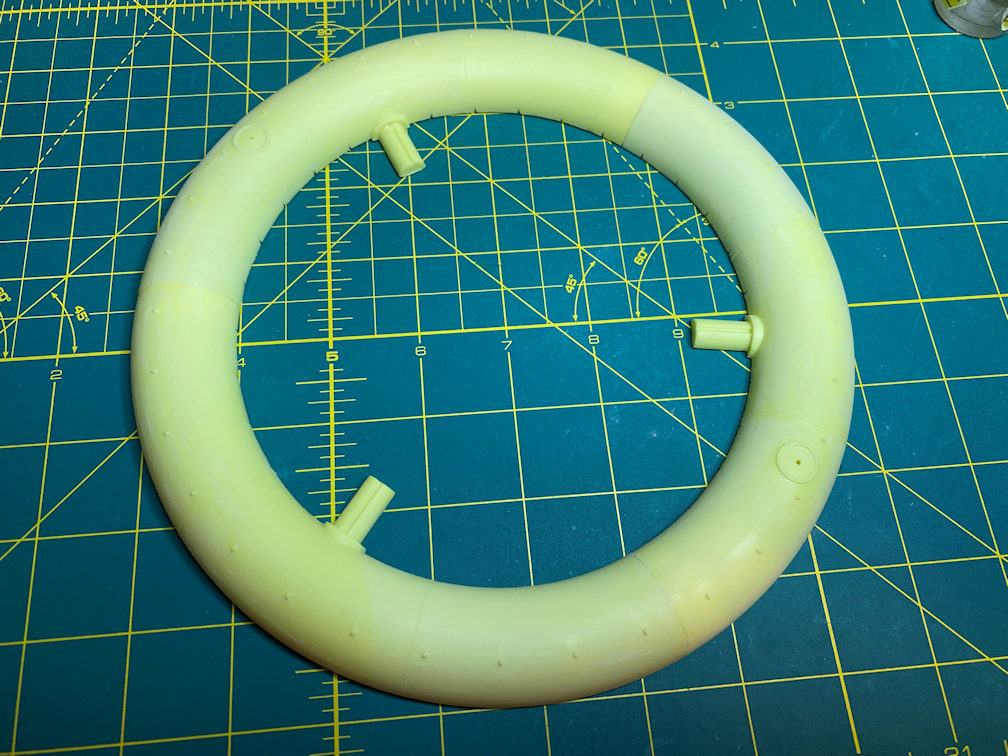
I then took a look at the hub to make sure that, after putting the center top section on, the holes were still visible. Some were.
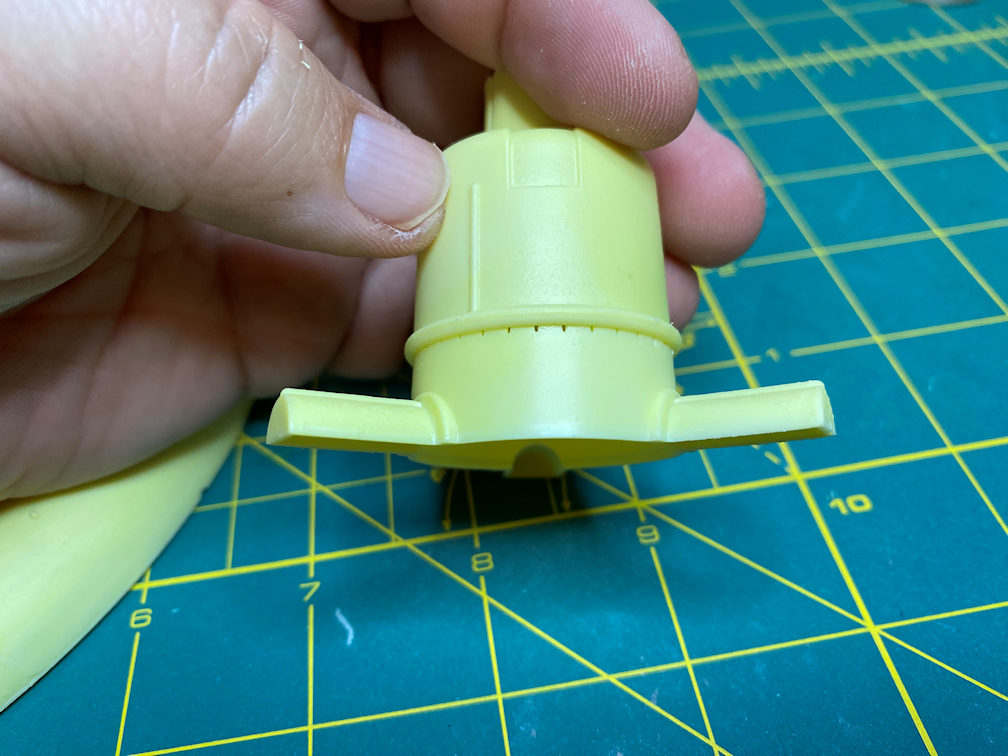
And some were not.

I used a .020 drill bit to enlarge the holes so the .020 rod would fit.
I then glued the large spokes to the center hub and then glued that to the main ring.

You can see that a bit of filling will be needed. That’s one ring half nearly completed and one still to go.
That’s it for now. Thanks for looking.
 Luhman-ations
One thought on “Glencoe Nuclear Powered Space Station Build”